Every day, organizations deploy software changes that can affect how internal teams and customers go about their daily lives. If a change goes wrong, that can impact everything from point of sale systems in your local grocery store to air traffic control to 911 and other emergency services.
The challenge for organizations is two-fold. They’re working with a large stack of tools from multiple vendors. At the same time, those tools are becoming increasingly more complex. Add in the drive for AI-assisted coding and the problem gets exponentially worse.
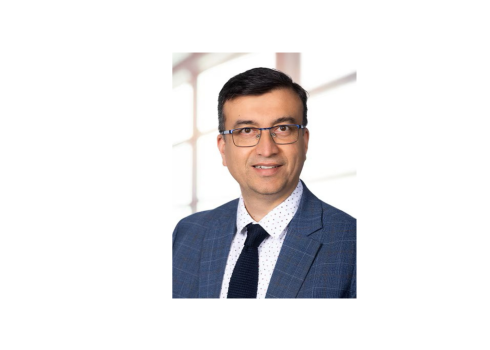
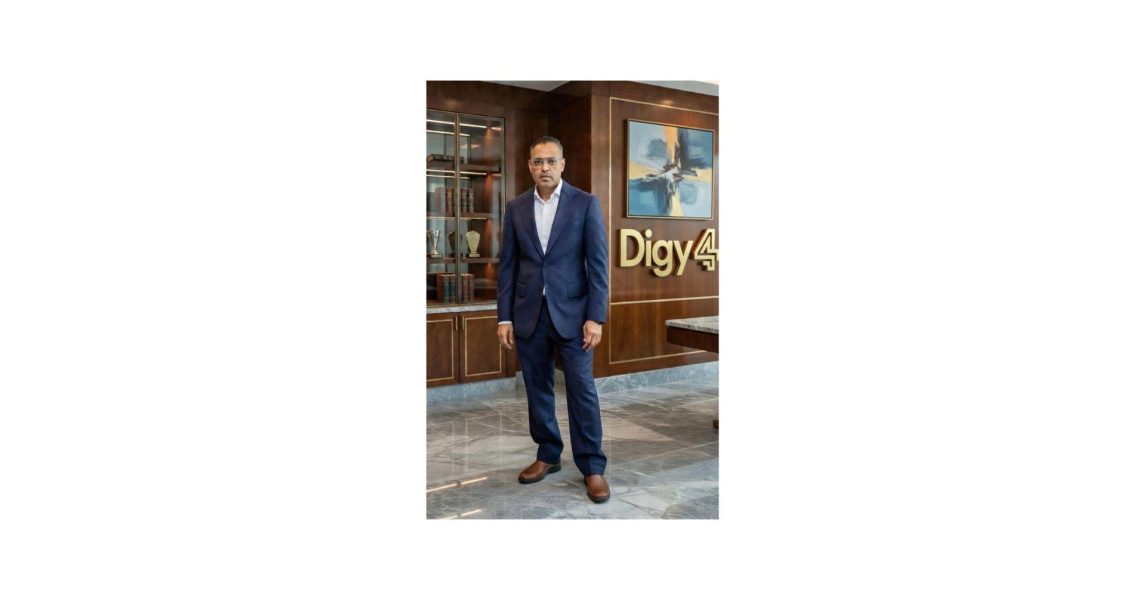
It’s a set of challenges that Parasar Saha has experienced first hand. Saha is the CEO of Markham-based Digy4, a software company that’s developed an AI agent to help large enterprises manage risk across their systems.
“When you plan or push a change, the work runs through many different tools. It's very difficult to pull data from all those teams into a single view. That's what we built. It’s a platform with integrations to all of those tools, feeding one dashboard. On top of that data, we've built an AI agent that tells you where the risk is,” Saha said.
Digy4’s AI agent is named RITA, which stands for Risk Incident Triage Analyst. Saha said in highly regulated industries like finance and insurance, understanding risk potential is critical to protecting sensitive company and customer data. Unlike general large language model AIs like ChatGPT and Claude, RITA is built and trained specifically to address risk identification and mitigation.
“In regulated industries, the value is repeatability and explainability. If you ask a large language model the same question twice, with no change in the underlying data, you can get two different answers, and it won't explain why,” he said.
Once RITA identifies a risk, it tracks it and gives the customer a mitigation plan. That can include handling a fix itself or altering a human worker. Saha said the process works the same in an all-human team, but with Digy4 and RITA, the process can be scaled while maintaining repeatability and explainability,
“Different agents have different skills, such as project management, DevOps, development and testing. They each pick up their part and work to resolve it. Anything they can't resolve gets passed to a human,” he said.
Saha first saw these challenges working at companies like Apple and eBay. After immigrating to Canada in 2013, he worked at several large enterprises, including Scotiabank and Air Canada. It was at Canada’s largest airline where he connected the challenges and his passion for helping organizations move towards a modern approach to software development and deployment.
“I realized that if I could move an organization, I could do it for the whole industry,” Saha said. “So I stepped out and built Digy4, which has now been running for over five years. From day one, we set out to build enterprise solutions, and despite being a startup, we work with some of Canada's largest enterprises.”
Digy4 has benefited from the support of several groups across the area, including the team at ventureLab. He said Markham makes sense as a headquarters for the company because of the large concentration of regulated industries here, such as automotive manufacturers.
“Markham is a strong ecosystem where we can be a real technology partner,” Saha said.