Drones and other other uncrewed aerial systems (UASs) are used for everything from capturing stunning video content to inspecting aging bridges for defects. But with over 855,000 drones registered in the U.S. alone, they are also quickly becoming potential attack vectors for airports, stadiums, and other critical infrastructure. Markham-based Tron Motors is helping to not only detect these threats, but also defend against them with its AI-enabled counter-UAS platform.
“Anyone can get a drone, and they're available almost everywhere. A drone weighs around 300 grams to 1 kilogram. At a speed of around 100 kilometers an hour, if it hits something, it can be deadly and cause substantial damage. That's a public safety problem, and we saw drones becoming a big one,” said Mikail Arani, co founder of Tron Motors.
Even before drones became one of the main weapons used in the Ukrainian-Russian conflict in 2022, Arani and his co-founders had recognized the risk that drones could be used as weapons. They initially explored how to protect military bases, seaports, airports, concerts, and other public gatherings from that threat.
“There are a lot of gatherings in Canada with foreign delegations meeting in a building or a tent. How do you protect them? We also have oil refineries and nuclear reactors that could be targets for anyone who wants to cause damage or disruption. So our first idea was how to create a layer of safety for the public and society. Then the Ukraine war happened, and we saw it could go to the next level,” Arani said.
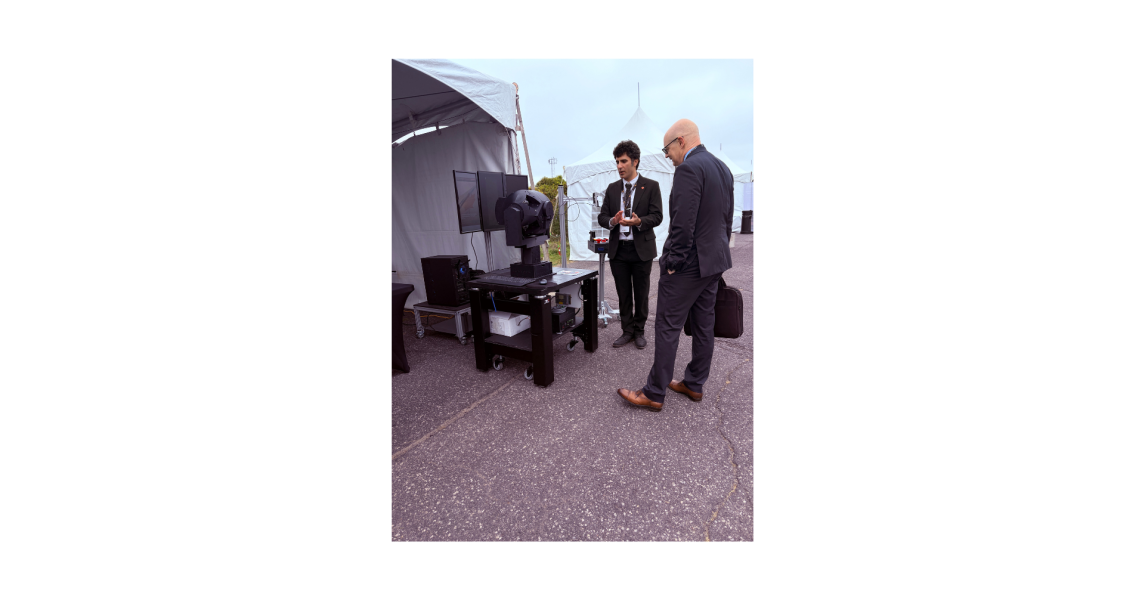
Tron Motors is solving a very complicated problem using cutting-edge deep tech. It combines optics, physics, and AI to track potential drone threats as they move through the air. If the threat has to be neutralized, Tron Motor’s system can connect with a defense system to act.
“Is the projectile coming closer or moving away? When is the best time to act? We started with the most difficult object to track,” Arani said. “A drone can be very small. Later we'll move to larger projectiles, like ballistic missiles. That's the next level for us.”
Tron Motors is solving these technological challenges with a lean team of ten specialist engineers. Their areas of expertise range from physics and optics to mechanical design and control systems.
“We're very specialized and focused on what we're accomplishing now, but we're also thinking about the next step,” Arani added.
They’re also the only Canadian-based company building this type of technology, something Arani said makes them the first choice for the federal government as it works to reshore defense contracts.
Tron Motors is based in ventureLAB and Arani said that Markham’s and the larger York Region’s advanced manufacturing ecosystem makes building here the right choice.
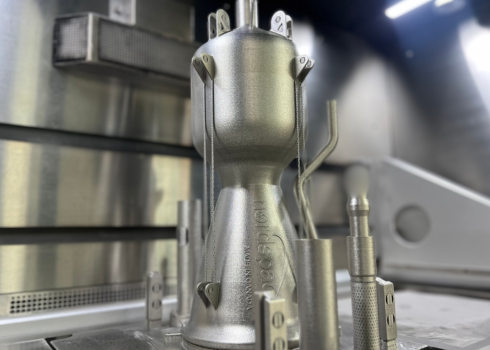
“You can get a lot of support and services, from machining to additive manufacturing. It's a very strong network. Over a weekend you can have a full working prototype,” he said.
It’s not just the connections that make Markham work for Tron Motors, it’s the trust that’s been built between people in the community, Arani added.
“I have a very long list of contacts, from a plumber to a physicist who can do complicated quantum computing calculations.”
“The defense sector specifically needs two things: safe, reliable systems that work all the time without any problems, and simplicity. We take advantage of this ecosystem for that,” he said. “You shouldn't underestimate what's happening in York Region.”